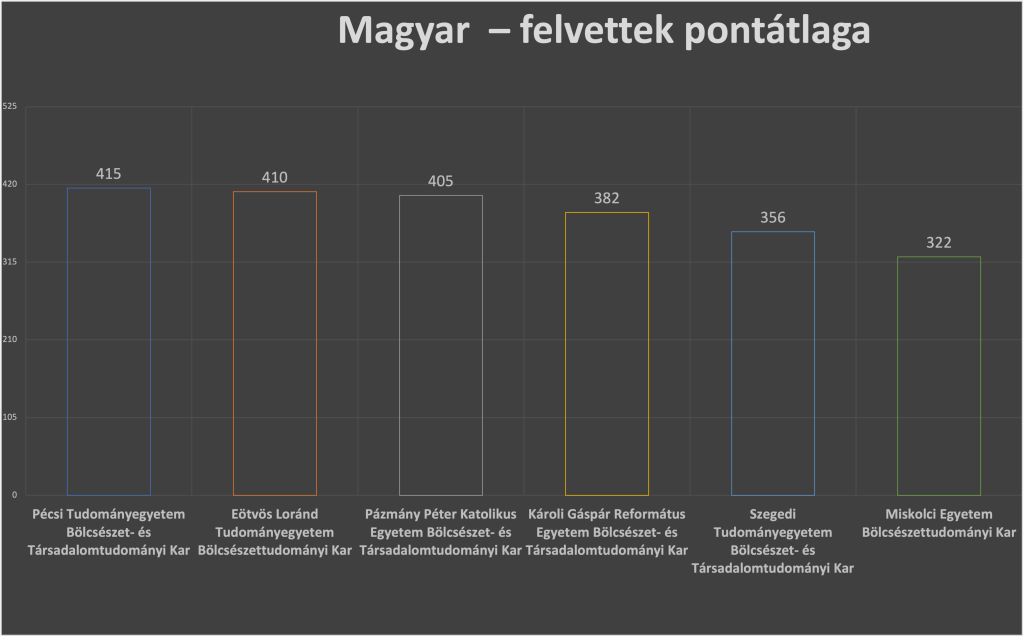

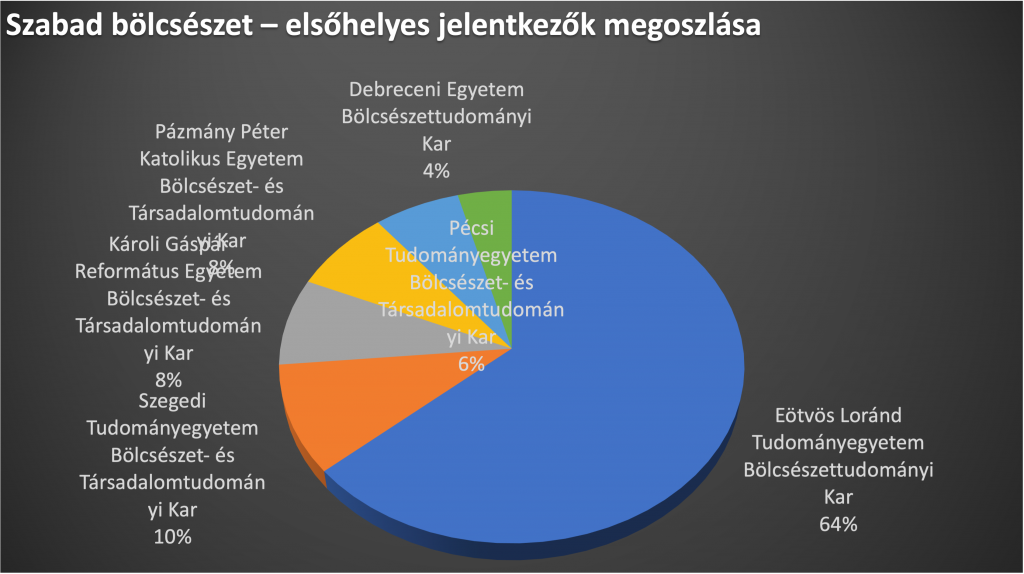
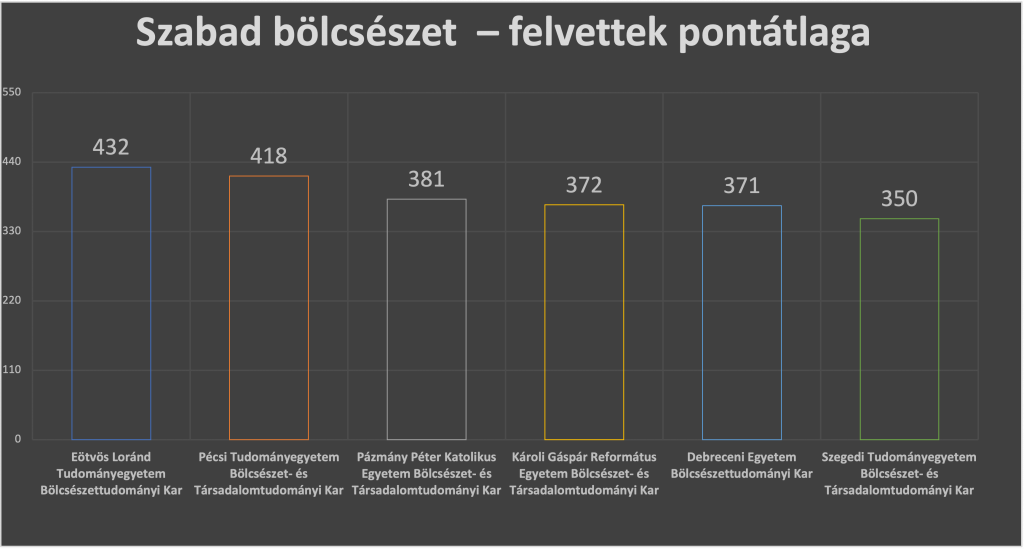

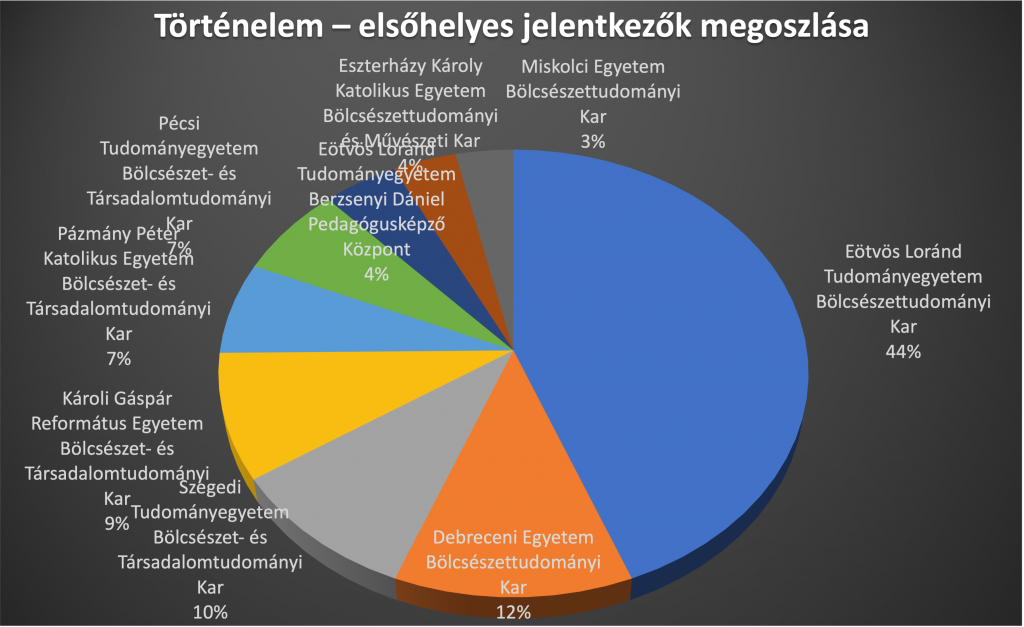
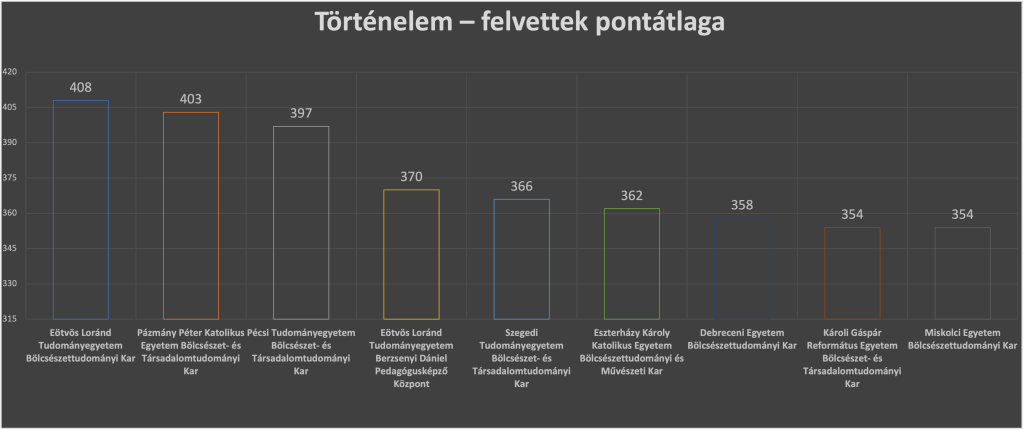
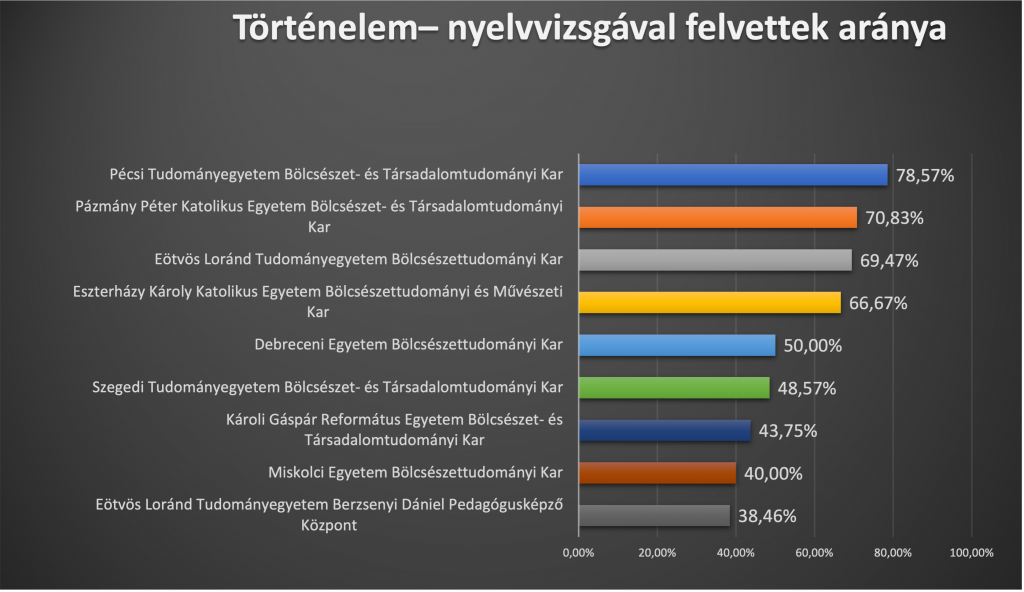
A bölcsészeti irányok továbbra is sok jelentkezőt vonzanak, bár az olyan hagyományosabb szakokon, mint a magyar, a szabad bölcsészet vagy a történelem, ma már kisebb az érdeklődés. Első helyen kimagaslóan az ELTE Bölcsészkarát jelölik meg a legtöbben, magyarból több, mint a fele, szabad bölcsésztből közel kétharmada, történelemből csaknem a fele a jelentkezőknek ezen a karon szeretne továbbtanulni. Mivel az átlagpontszámban is a pesti Bölcsészkarra jelentkezők teljesítettek a legjobban a történészek és szabad bölcsészek közül, így itt (ahogyan ezt megszokhattuk), ő vezeti a szakos listát, míg magyarból az alacsonyabb nyelvvizsgás-arány miatt a msodik helyre került, a pécsi Bölcsészeti- és Társadalomtudományi Kar mögé. Pécsett ugyanis magyar szakon a pontátlag is magas illetve a nyelvvizsgások arányában is vezetik a mezőnyt.
Anglisztika-germanisztika
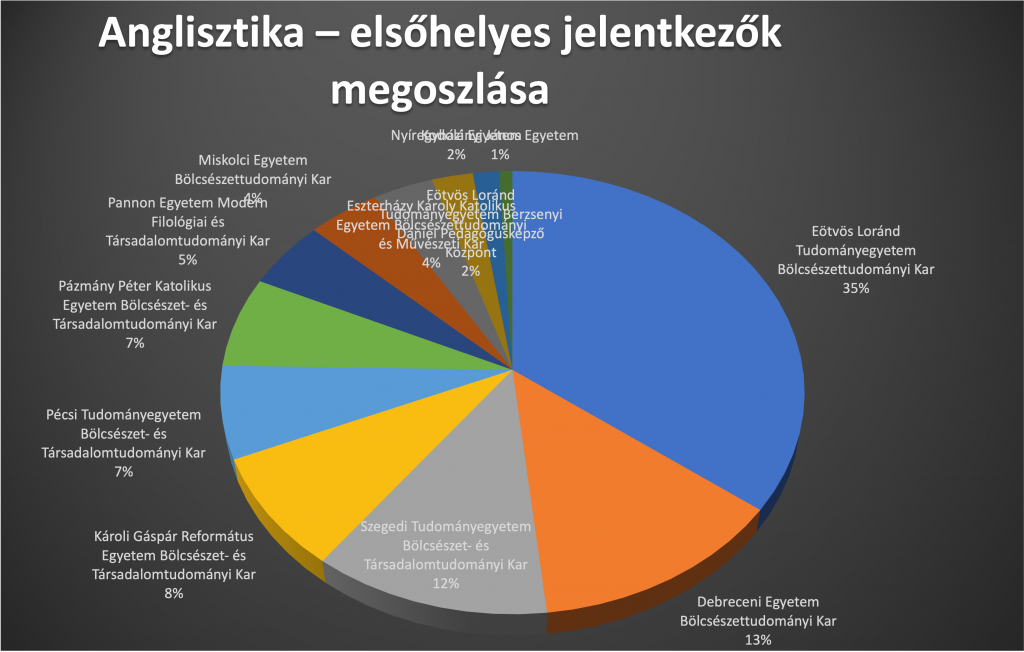
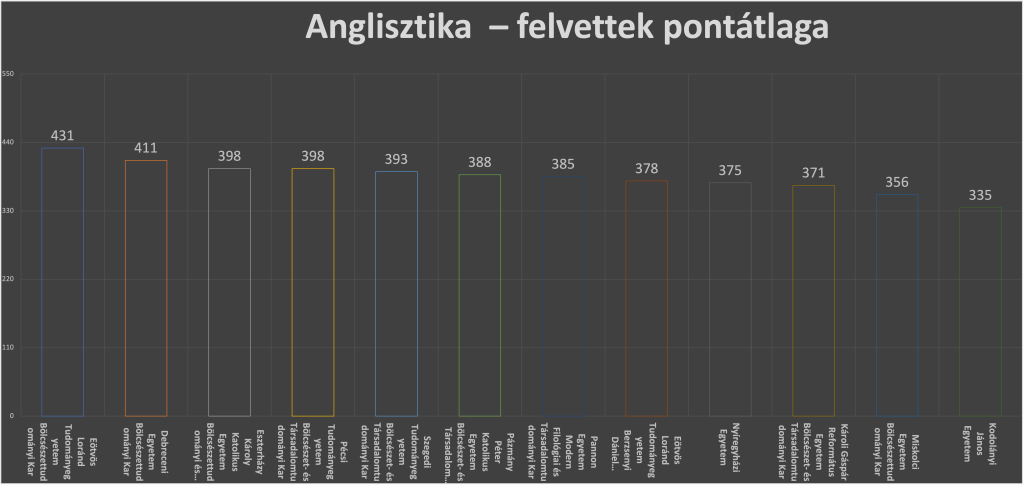
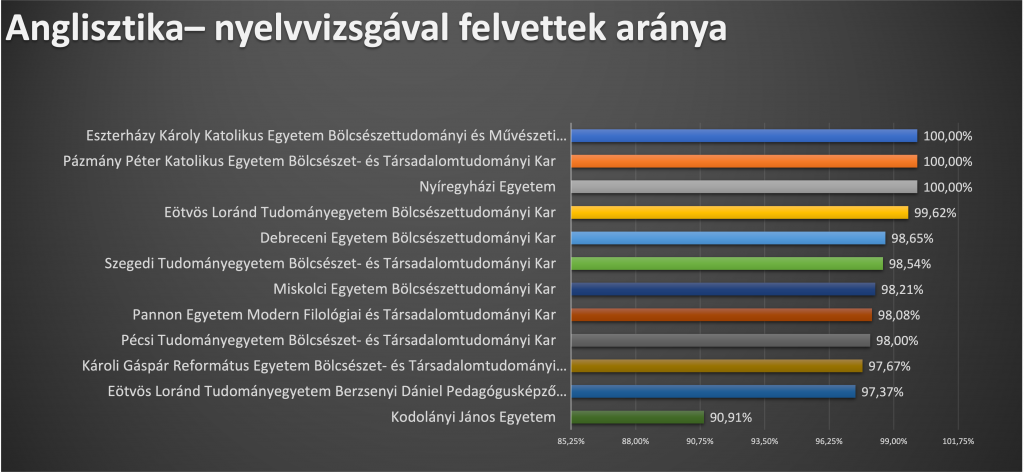
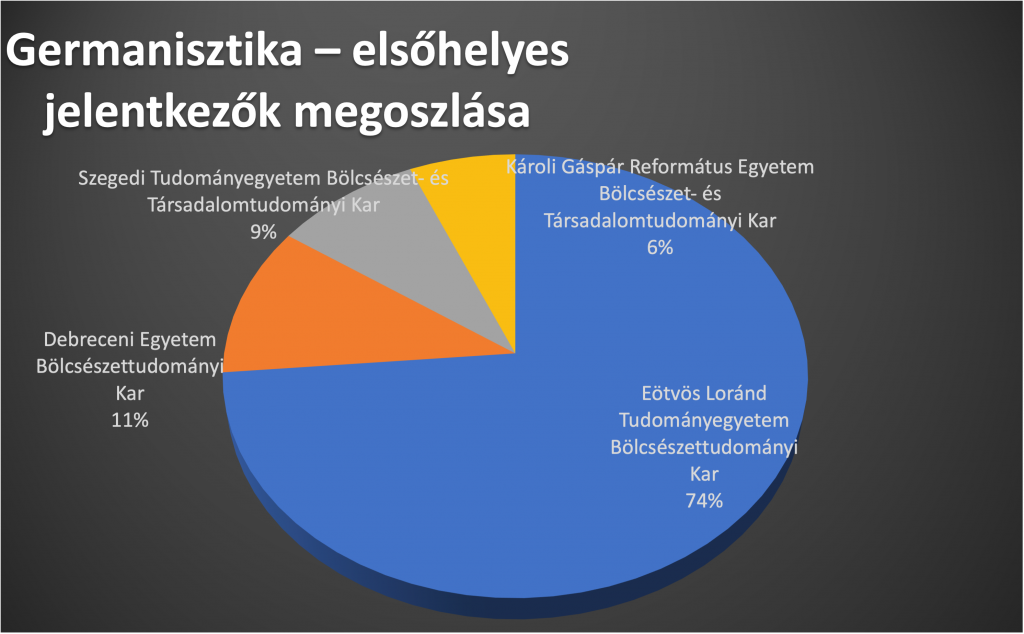
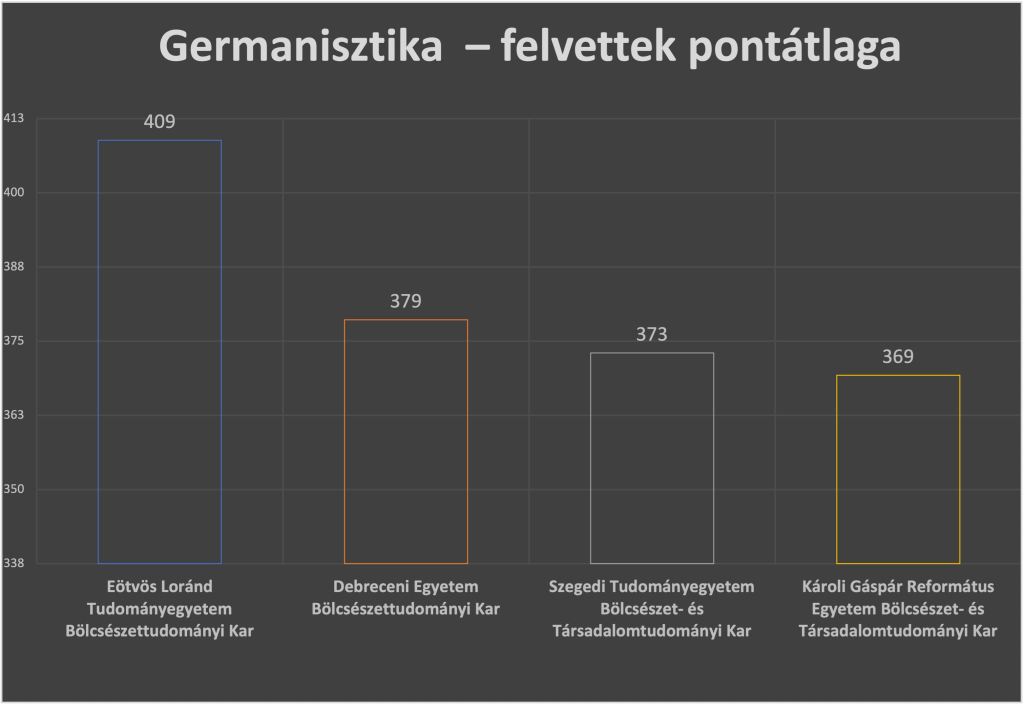
A nyelvvizsga ügye egyébként a legnagyobb nyelvi szakokon sem egyértelmű, hiszen anglisztikán például, amit összességében szintén az ELTE BTK vezet, a nyelvvizsgások arányában a negyedik helyre szorult, mivel három intézményben (Eszterházy Károly katolikus Egyetem, a Pázmány, Nyíregyháza) 100%-os a nyelvvizsgások aránya – bár mindhárom intézményben lényegesen kisebb hallgatói érdeklődés mellett. Az ELTE BTK angolosainak magas átlagpontszáma is biztosítja a kar vezető pozícióját, ahogyan a Debreceni Egyetem Bölcsészettudományi Karának a második helye is ezen a területen mutatott kiválóság miatt adott, amellett, hogy ide jelentkeztek a második legtöbben első helyen. Germanisztikán is hasonló a helyzet, itt azonban jóval kisebb a jelentkezési szám, viszont minden tekintetben az ELTE BTK vezeti a mezőnyt.

Közösségszervezés
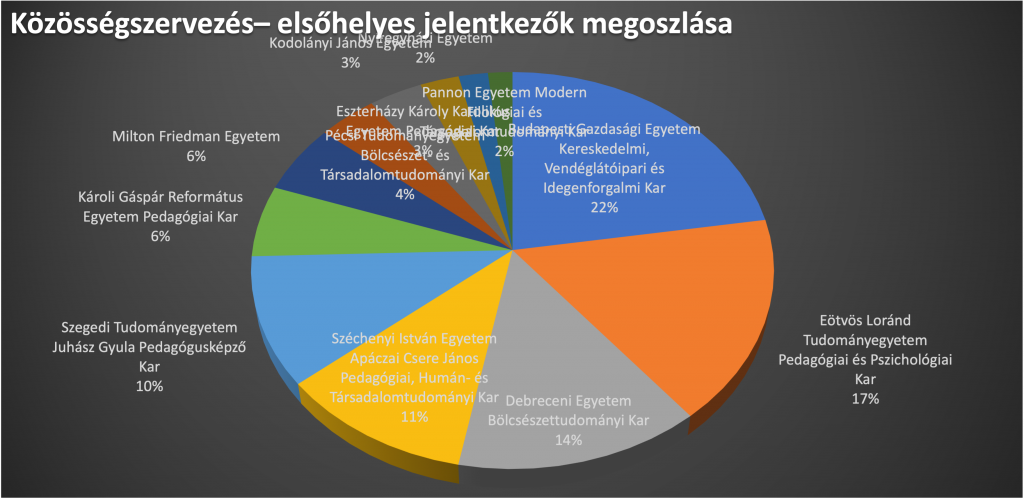
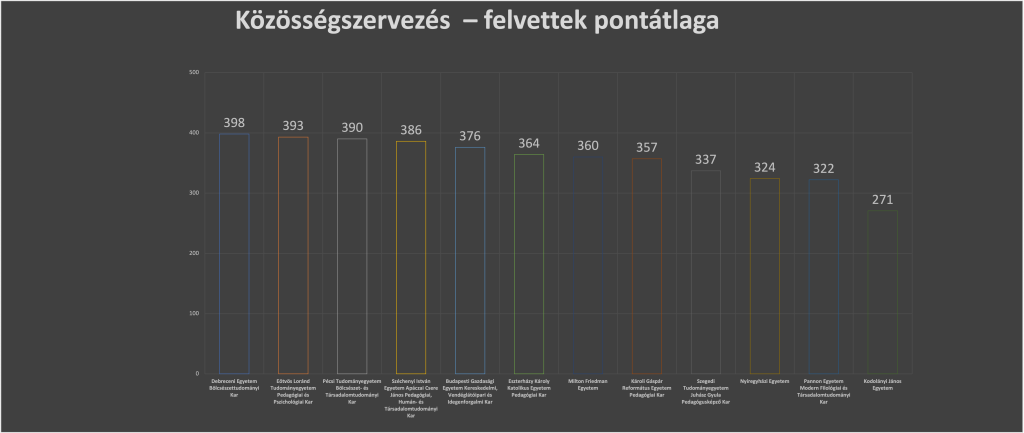
Sokkal többen jelölik meg a közösségszervezést első helyen, közülük a legtöbben nem egy klasszikus bölcsészképzőt, hanem a Budapesti Gazdasági Egyetem Kereskedelmi Budapesti Gazdasági Egyetem Kereskedelmi, Vendéglátóipari és Idegenforgalmi Karára mennének. A pontátlag itt kiegyenlítettebb, Denreecn áll az élen benne, az ELTE és Pécs előtt, míg a nyelvvizsgásoknál az ELTE PPK mögött a győri Apáczai Csere János Pedagógiai, Humán- és Társadalomtudományi Kar és a Debreceni BTK áll. Összességében Debrecen sé az ELTE PPK vezeti a szakos rangsort.

Pszichológia
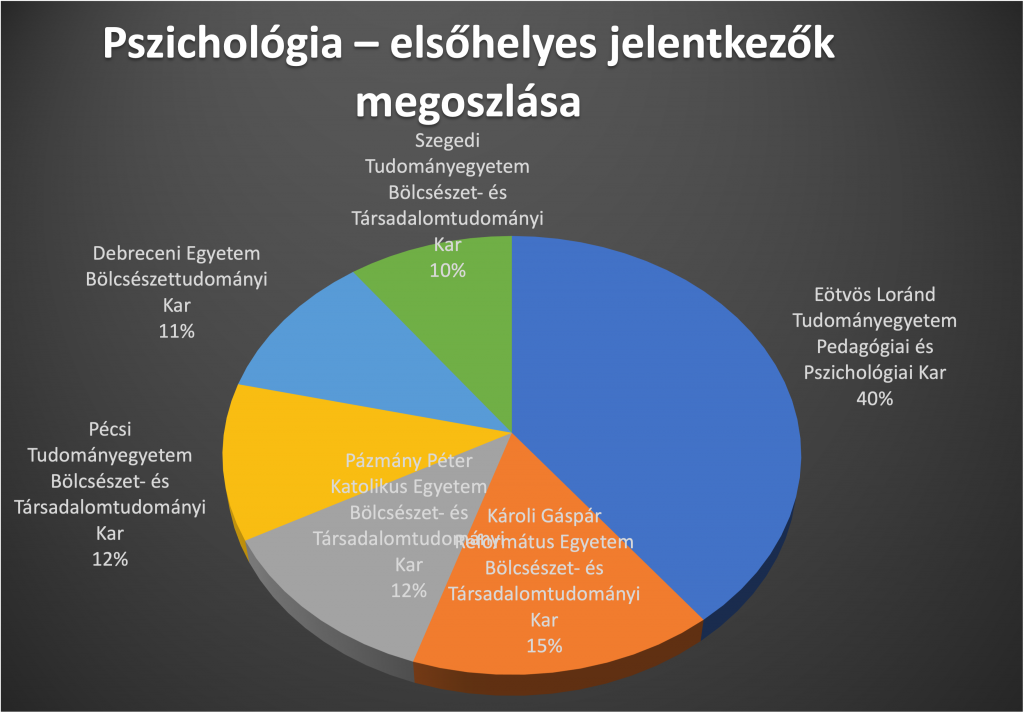
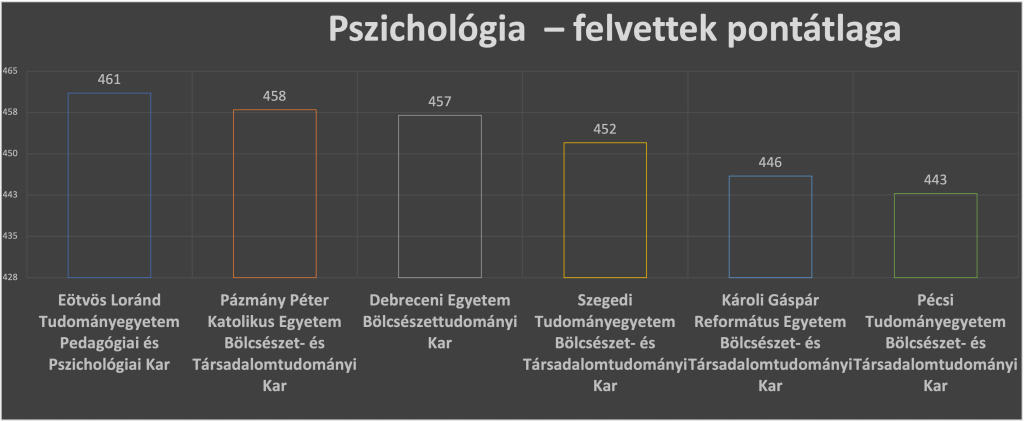
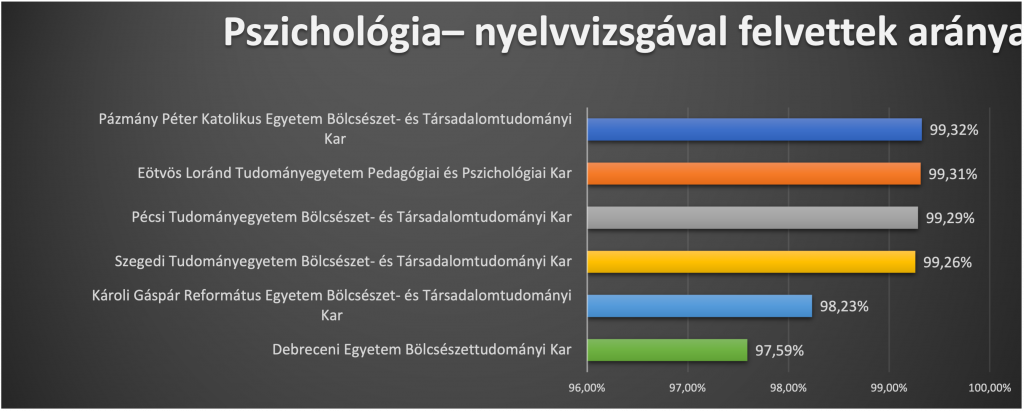
A legnépszerűbb bölcsészképzés egyben a magyar felsőoktatás egyik legtöbb hallgatót vonzó és legmagasabb bekerülési küszöbbel rendelkező képzése, a pszichológia. Csaknem háromezren jelölték meg első helyen, akikből az ELTE PPK-ra 40%-uk szertett volna bekerülni, kétésfélszer többen, mint a második helyen álló Pázmány Péter Katolikus Egyetem pszichológia szakára. A Károli Gáspár Református Egyetem áll a harmadik helyen a rangsorban, amit a közel féleezer jelentkezőnek köszönhet. A pontátlag mindenütt igen magas, az egyik legmagasabb a magyar felősoktatásban, és meglehetősen kiegyenlített: Az ELTE PPK mögött a Pázmány, Debrecen és Szeged pszichológus felvettjei is kiválóan teljesítettek (de még ezen a részlistán hatodik Pécsett és 443 pont az átlag…). A pszichológián továbbtanulók szinte mindegyike nyelvvizsgával rendelkezik, a Pázmányon, az ELTE-n és Pécsett és Szegeden is 99% feletti az arányuk, de a Károli 98 és Debrecen 97%-ot meghaladó átlaga is ezt jelenti. A szakos rangsorban mindezek miatt az ELTE PPK vezető pozíciója egyértelmű.
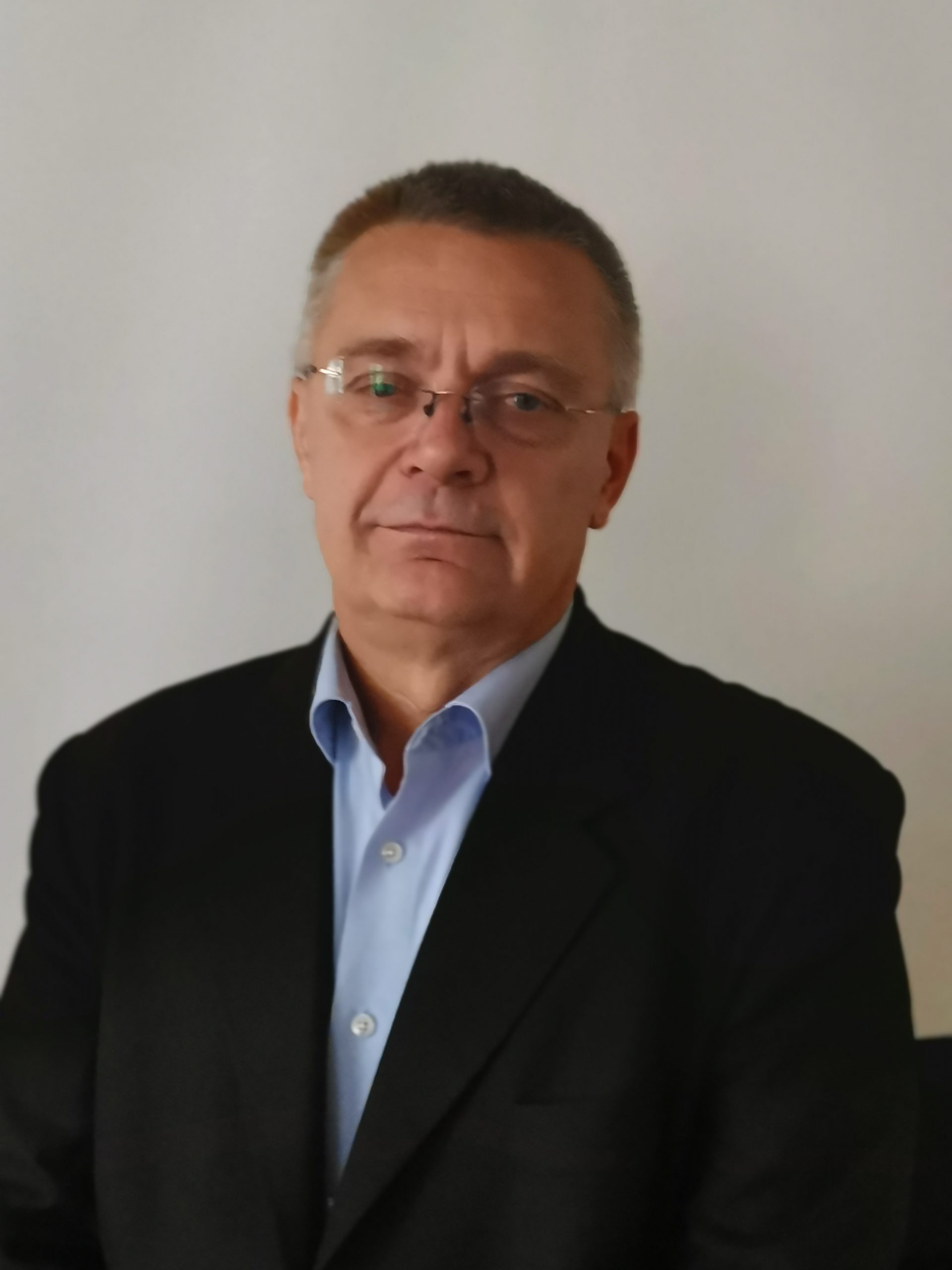 Dr. habil György Fábri (1964) is an habilitated associate professor (Institute of research on Adult Education and Knowledge Management, Faculty of Education and Psychology of Eötvös Loránd University), head of the Social Communication Research Group. Areas of research: university philosophy, sociology of higher education and science, science communication, social communication, church sociology. His monograph was published on the transformation of Hungarian higher education during the change of regime (1992 Wien) and on university rankings (2017 Budapest). He has edited several scientific journals, and his university courses and publications cover communication theory, university philosophy, science communication, social representation, media and social philosophy, ethics, and church sociology.
 Mr. Degli Esposti is Full Professor at the Department of Computer Science and Engineering, Deputy Rector Alma Mater Studiorum Università di Bologna, Dean of Biblioteca Universitaria di Bologna, Head of Service for the health and safety of people in the workplace, President of the Alma Mater Foundation and Delegate for Rankings.
 Ben joined QS in 2002 and has led institutional performance insights function of QS since its emergence following the early success of the QS World University Rankings®. His team is, today, responsible for the operational management of all major QS research projects including the QS World University Rankings® and variants by region and subject. Comprising over 60 people in five international locations, the team also operate a widely adopted university rating system – QS Stars – and a range of commissioned business intelligence and strategic advisory services.Ben has travelled to over 50 countries and spoken on his research in almost 40. He has personally visited over 50 of the world’s top 100 universities amongst countless others and is a regular and sought after speaker on the conference circuit.Ben is married and has two sons; if he had any free time it would be spent reading, watching movies and skiing.
 Anna Urbanovics is a PhD student at Doctoral School of Public Administration Sciences of the University of Public Service, and studies Sociology Master of Arts at the Corvinus University of Budapest. She is graduated in International Security Studies Master of Arts at the University of Public Service. She does research in Scientometrics and International Relations.

 Dr. Mircea Dumitru is a Professor of Philosophy at the University of Bucharest (since 2004). Rector of the University of Bucharest (since 2011). President of the European Society of Analytic Philosophy (2011 – 2014). Corresponding Fellow of the Romanian Academy (since 2014). Minister of Education and Scientific Research (July 2016 – January 2017). Visiting Professor at Beijing Normal University (2017 – 2022). President of the International Institute of Philosophy (2017 – 2020). President of Balkan Universities Association (2019 – 2020). He holds a PhD in Philosophy at Tulane University, New Orleans, USA (1998) with a topic in modal logic and philosophy of mathematics, and another PhD in Philosophy at the University of Bucharest (1998) with a topic in philosophy of language. Invited Professor at Tulsa University (USA), CUNY (USA), NYU (USA), Lyon 3, ENS Lyon, University of Helsinki, CUPL (Beijing, China), Pekin University (Beijing, China). Main area of research: philosophical logic, metaphysics, and philosophy of language. Main publications: Modality and Incompleteness (UMI, Ann Arbor, 1998); Modalitate si incompletitudine, (Paideia Publishing House, 2001, in Romanian; the book received the Mircea Florian Prize of the Romanian Academy); Logic and Philosophical Explorations (Humanitas, Bucharest, 2004, in Romanian); Words, Theories, and Things. Quine in Focus (ed.) (Pelican, 2009); Truth (ed.) (Bucharest University Publishing House, 2013); article on the Philosophy of Kit Fine, in The Cambridge Dictionary of Philosophy, the Third Edition, Robert Audi (ed.) (Cambridge University Press, 2015), Metaphysics, Meaning, and Modality. Themes from Kit Fine (ed.) (Oxford University Press, forthcoming).
 Since 1 February 2019 Minister Palkovics as Government Commissioner has been responsible for the coordination of the tasks prescribed in Act XXIV of 2016 on the promulgation of the Agreement between the Government of Hungary and the Government of the People’s Republic of China on the development, implementation and financing of the Hungarian section of the Budapest-Belgrade Railway Reconstruction Project.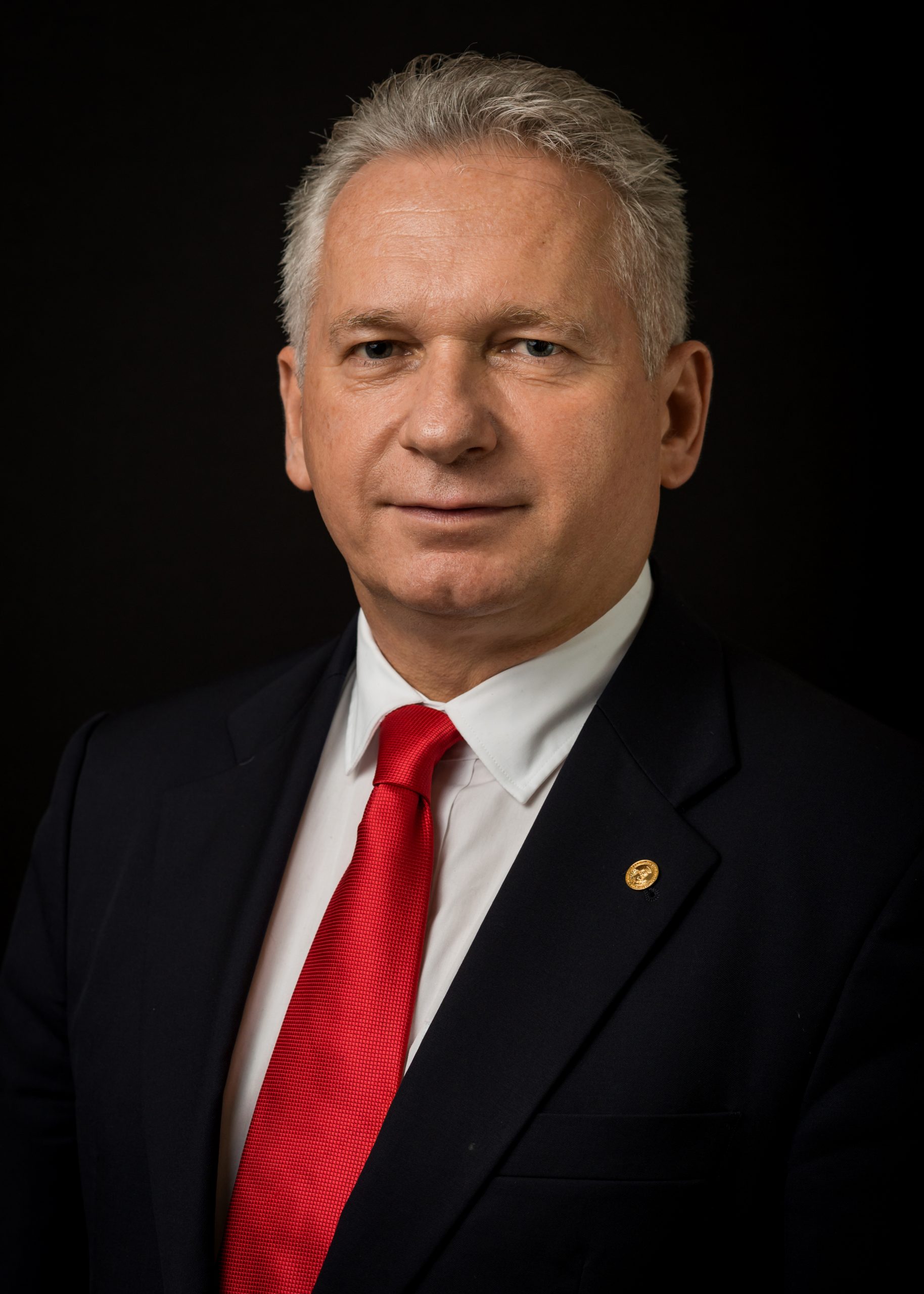
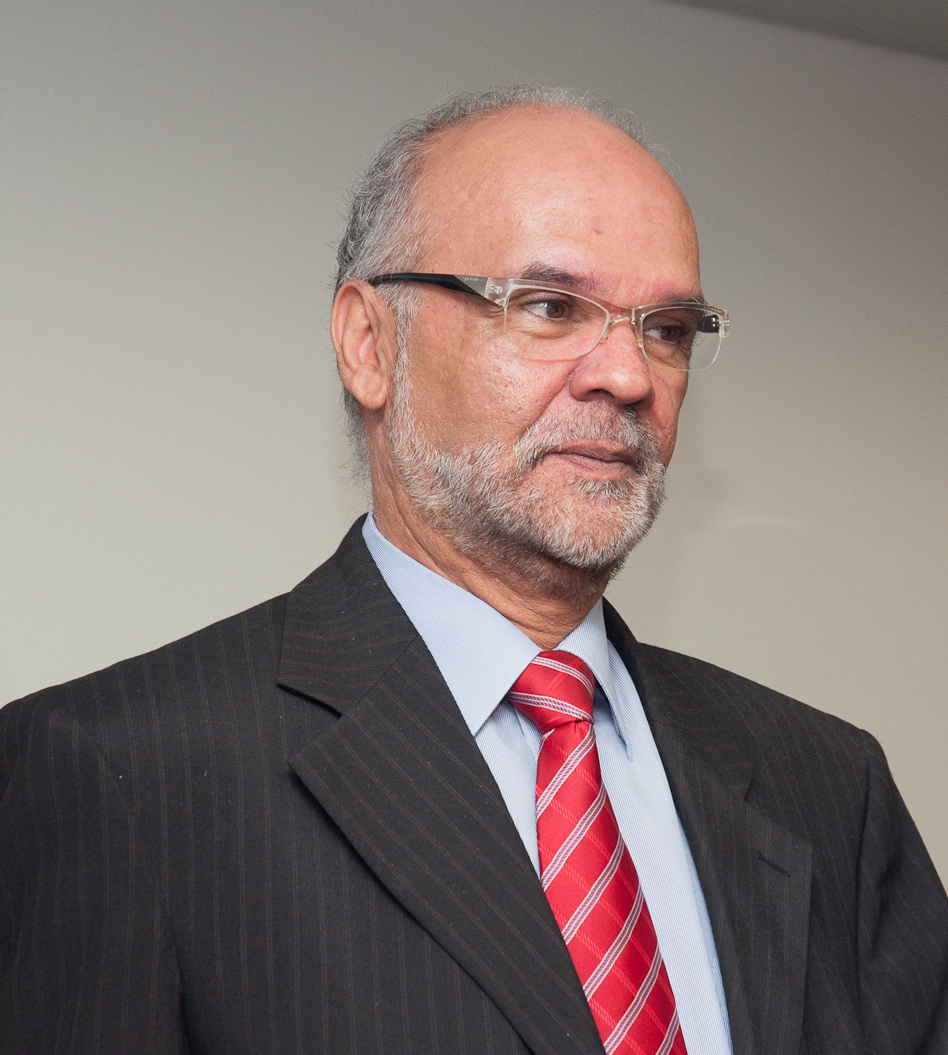
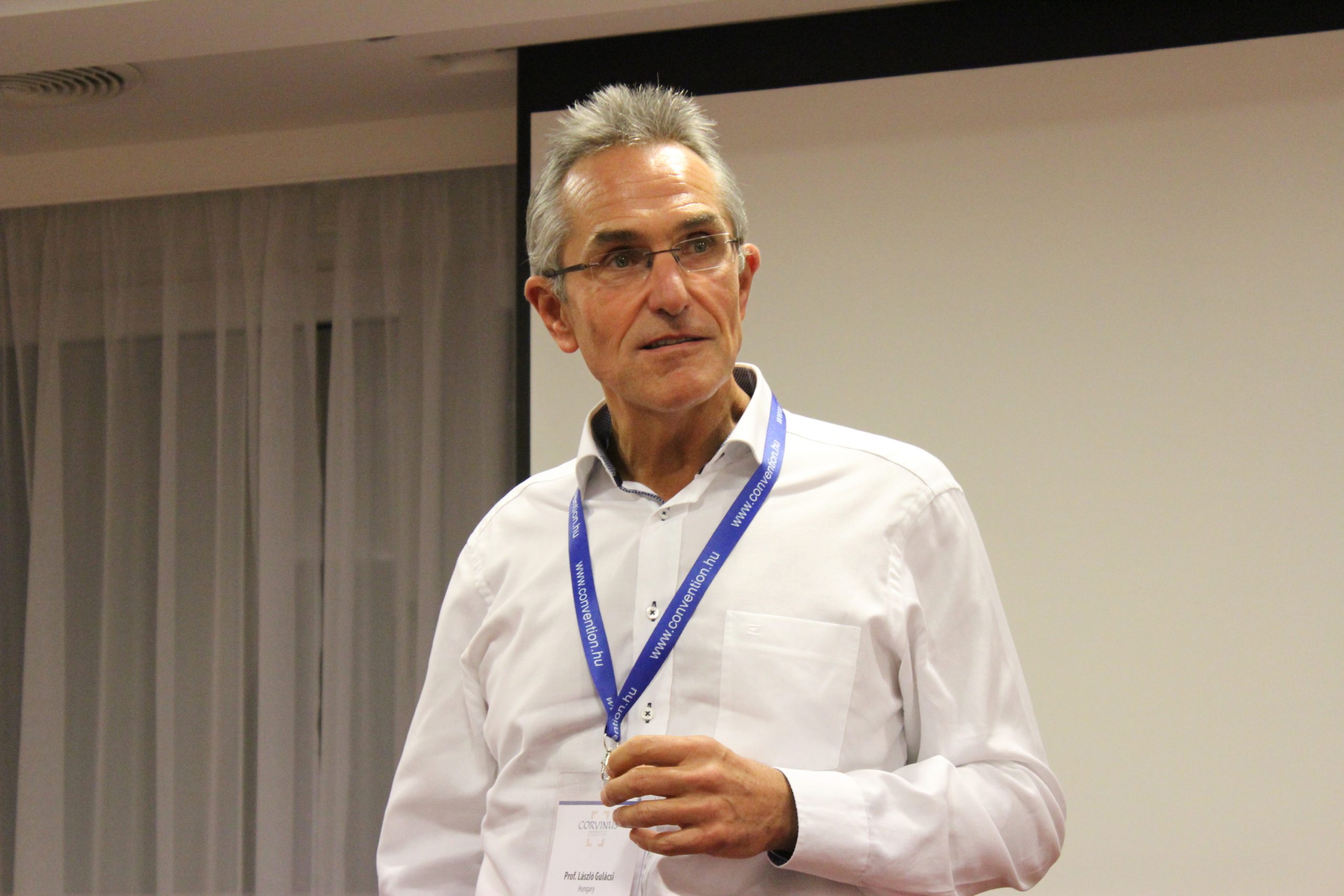 He is the past President of the Health and Health Care Economics Section of the Hungarian Economics Association.

 Based in Berlin, Zuzanna Gorenstein is Head of Project of the German Rectors’ Conference (HRK) service project “International University Rankings” since 2019. Her work at HRK encompasses the conceptual development and implementation of targeted advisory, networking, and communication measures for German universities’ ranking officers. Before joining the HRK, Zuzanna Gorenstein herself served as ranking officer of Freie Universität Berlin.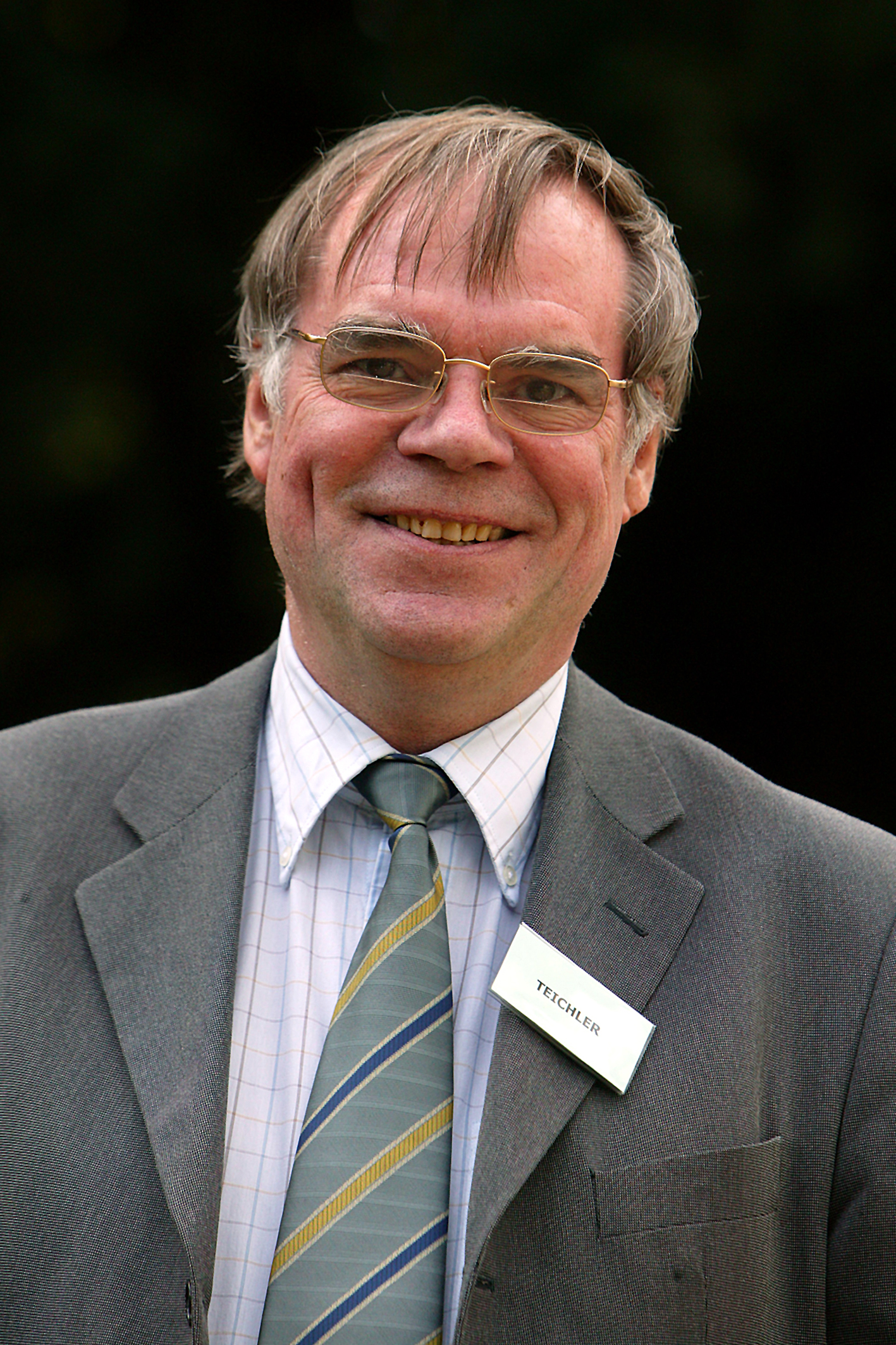
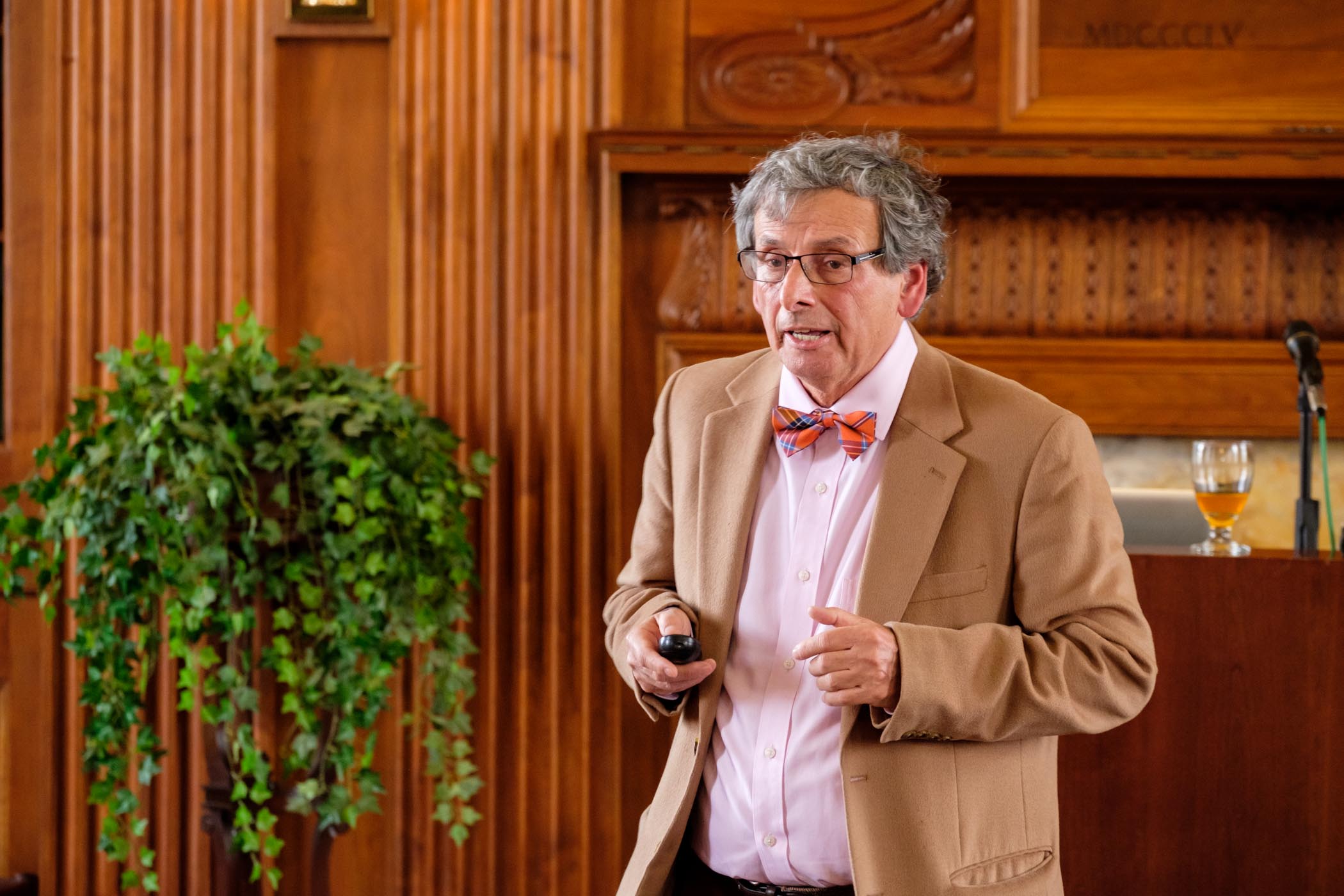 His books on mathematical modeling of chemical, biological, and other complex systems have been published by Princeton University Press, MIT Press, Springer Publishing house. His new book RANKING: The Unwritten Rules of the Social Game We All Play was published recently by the Oxford University Press, and is already under translation for several languages.