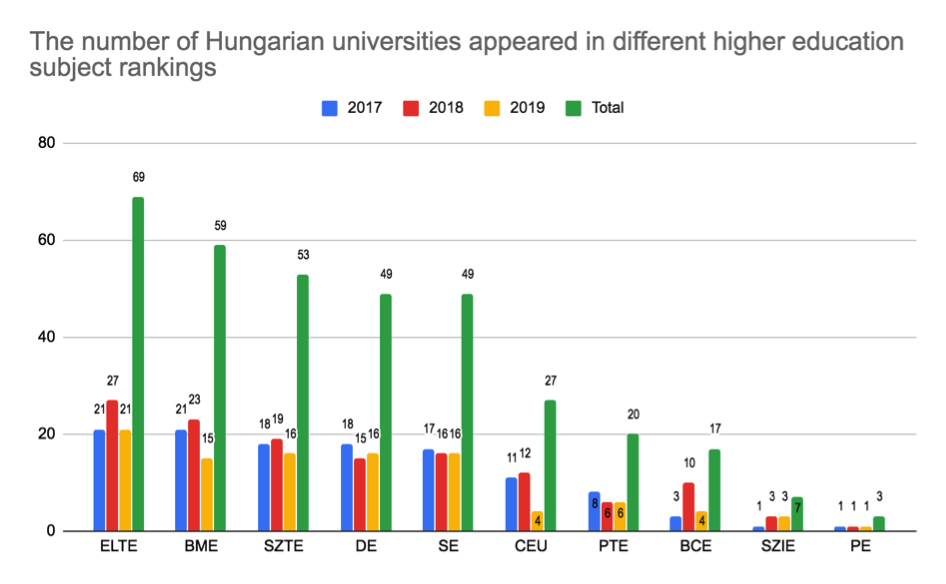
The number of positions gained by Hungarian universities in different subject rankings have been growing year by year. While in 2017 there were 119 positions altogether in ARWU, Leiden, QS, THE and US News subject rankings, in 2018 this number was 132. Examining recent performance so far without QS subject rankings 2020, 102 Hungarian positions featured in rankings, comparing to 89 positions in previous year (without counting QS subject ranking).
Taking a look at all appearances of institutions, ELTE tops the subject ranking lists with 69 presences during the last three years, while BME was listed 59 times, Szeged 53 times, Debrecen and CEU 49 times. At the end of the list Pécs gained 20 positions, Corvinus came with 17, 7 positions for Szent István University, and 3 for Pannon University.
Great differences appear when examining particular subjects, although comparing various subject rankings encounter obstacles due to several different definitions for disciplines. As an example, Leiden and QS both lists five areas of disciplines, but the two lists differ. Furthermore, while QS attaches additional subjects to these areas, Leiden compiles rankings using these five disciplines.
| Leiden | QS |
| Biomedical and health sciences | Life sciences and medicine |
| Life and earth sciences | Natural sciences |
| Mathematics and computer science | Engineering and technology |
| Physical sciences and engineering | Social sciences and management |
| Social sciences and humanities | Arts and humanities |
Due to these differences, Hungarian universities’ performance will be examined separately by rankings, without comparison.
ARWU
In ARWU 2018-2019 four new ranks are seen comparing to previous years, while two former positions has fallen out. ELTE disappeared from earth sciences, but it emerged in public administration (151-200th). Szeged fell out from mathematics, but climbed up in the field of pharmacy and pharmaceutical sciences. In the field of public health two newcomers are listed: Semmelweis and Pécs are both appeared in 401-500th, while Debrecen emerged in ecology (401-500th). Some universities crawled back, such as ELTE in the field of mathematics, Pannon in the field of chemical engineering and Semmelweis in three different subjects (clinical medicine, pharmacy and pharmaceutical sciences, medical technology). The rest of the positions remained the same as in previous years. The best appearances among Hungarian universities belong to ATE (University of Veterinary Science) in the field of veterinary science at 101-150th and CEU in the field of economics (101-150th).
Leiden
Leiden is special among higher education rankings as it is based on publication data which provides objectivity.
Hungarian institutions’ ranking was better in 6 cases in 2019, while 11 institutions’ performance was worse. ELTE, Debrecen and BME moved in both directions in the five areas, while Semmelweis and Szeged crawled back. In the field of biomedical and health sciences, there are only worsening positions, while in the other four areas some improvements are seen. One of the most significant changes belong to Debrecen, which rose from 719th to 695th in mathematics and informatics, while the other case is the improvement of BME in physical and engineering science, from 425th to 399th place. One of the major downturns is also related to the physical and engineering sciences, ELTE came up for 741st after 703rd, while Szeged moved from 646th to 681st. In the field of mathematics and computer sciences, ELTE also shew a significant decline, after its 544th place in 2018 this year it was listed 616th. The best Hungarian institution in Leiden subject ranking was Semmelweis University in the field of biomedical and health sciences at the place 372nd.
THE
Among examined academic rankings, the most positive changes in the ranking of Hungarian universities are detected in THE subject ranking. There were only three downturns (ELTE, Szeged, Pécs – ELTE and Pécs fell back one category and Szeged was not ranked in 2019), with nine improvements. In three of these cases we can speak of a new position: Debrecen in the field of social sciences is 301-400th, Pécs was ranked 801+ category in physical sciences, while Szent István University appeared in 601+ in life sciences. Improving placements are also related to these two disciplines: ELTE, BME and Corvinus have improved in social sciences, while ELTE, Debrecen and Szeged have improved in physical sciences, compared to their positions in 2018. ELTE ranked the best in the field of psychology among Hungarian institutions at 251-300th place.
US News
US News also shows more positive changes compared to last year’s ranking. In eight cases, institutions were left behind or dropped out, while the other 18 positions are a step up from last year’s list. The downturns are related to four disciplines and six institutions. Pécs was not ranked after last year’s 385th place in the field of neuroscience and behavior. In the same discipline, Semmelweis became 289th in 2019 after last year’s 279th place. In the field of plant and animal science ELTE (339 -›361) and the University of Pannonia (383 -› 464) significantly deteriorated, but as a new entrant the University of Debrecen was ranked 424th in this field. In chemistry, ELTE (483 -› 514), BME (474 -› 482) and Szeged (474 -› 525) also worsened, while Debrecen appeared as new entrant at 617th. In engineering, BME moved from position 449th to position 498th. Positive shifts can also be seen in physics, biology, psychology and oncology. The best performance among Hungarian institutions belongs to Semmelweis, what was ranked 112th in the US News subject ranking in the subject of cardiac and cardiovascular systems.
Overall, ARWU and Leiden tend to be stagnant, while the rankings of THE and US News are dominated by improving positions. Compared to previous years, Hungarian institutions are ranked in more and more fields of science.
 Dr. habil György Fábri (1964) is an habilitated associate professor (Institute of research on Adult Education and Knowledge Management, Faculty of Education and Psychology of Eötvös Loránd University), head of the Social Communication Research Group. Areas of research: university philosophy, sociology of higher education and science, science communication, social communication, church sociology. His monograph was published on the transformation of Hungarian higher education during the change of regime (1992 Wien) and on university rankings (2017 Budapest). He has edited several scientific journals, and his university courses and publications cover communication theory, university philosophy, science communication, social representation, media and social philosophy, ethics, and church sociology.
 Mr. Degli Esposti is Full Professor at the Department of Computer Science and Engineering, Deputy Rector Alma Mater Studiorum Università di Bologna, Dean of Biblioteca Universitaria di Bologna, Head of Service for the health and safety of people in the workplace, President of the Alma Mater Foundation and Delegate for Rankings.
 Ben joined QS in 2002 and has led institutional performance insights function of QS since its emergence following the early success of the QS World University Rankings®. His team is, today, responsible for the operational management of all major QS research projects including the QS World University Rankings® and variants by region and subject. Comprising over 60 people in five international locations, the team also operate a widely adopted university rating system – QS Stars – and a range of commissioned business intelligence and strategic advisory services.Ben has travelled to over 50 countries and spoken on his research in almost 40. He has personally visited over 50 of the world’s top 100 universities amongst countless others and is a regular and sought after speaker on the conference circuit.Ben is married and has two sons; if he had any free time it would be spent reading, watching movies and skiing.
 Anna Urbanovics is a PhD student at Doctoral School of Public Administration Sciences of the University of Public Service, and studies Sociology Master of Arts at the Corvinus University of Budapest. She is graduated in International Security Studies Master of Arts at the University of Public Service. She does research in Scientometrics and International Relations.

 Dr. Mircea Dumitru is a Professor of Philosophy at the University of Bucharest (since 2004). Rector of the University of Bucharest (since 2011). President of the European Society of Analytic Philosophy (2011 – 2014). Corresponding Fellow of the Romanian Academy (since 2014). Minister of Education and Scientific Research (July 2016 – January 2017). Visiting Professor at Beijing Normal University (2017 – 2022). President of the International Institute of Philosophy (2017 – 2020). President of Balkan Universities Association (2019 – 2020). He holds a PhD in Philosophy at Tulane University, New Orleans, USA (1998) with a topic in modal logic and philosophy of mathematics, and another PhD in Philosophy at the University of Bucharest (1998) with a topic in philosophy of language. Invited Professor at Tulsa University (USA), CUNY (USA), NYU (USA), Lyon 3, ENS Lyon, University of Helsinki, CUPL (Beijing, China), Pekin University (Beijing, China). Main area of research: philosophical logic, metaphysics, and philosophy of language. Main publications: Modality and Incompleteness (UMI, Ann Arbor, 1998); Modalitate si incompletitudine, (Paideia Publishing House, 2001, in Romanian; the book received the Mircea Florian Prize of the Romanian Academy); Logic and Philosophical Explorations (Humanitas, Bucharest, 2004, in Romanian); Words, Theories, and Things. Quine in Focus (ed.) (Pelican, 2009); Truth (ed.) (Bucharest University Publishing House, 2013); article on the Philosophy of Kit Fine, in The Cambridge Dictionary of Philosophy, the Third Edition, Robert Audi (ed.) (Cambridge University Press, 2015), Metaphysics, Meaning, and Modality. Themes from Kit Fine (ed.) (Oxford University Press, forthcoming).
 Since 1 February 2019 Minister Palkovics as Government Commissioner has been responsible for the coordination of the tasks prescribed in Act XXIV of 2016 on the promulgation of the Agreement between the Government of Hungary and the Government of the People’s Republic of China on the development, implementation and financing of the Hungarian section of the Budapest-Belgrade Railway Reconstruction Project.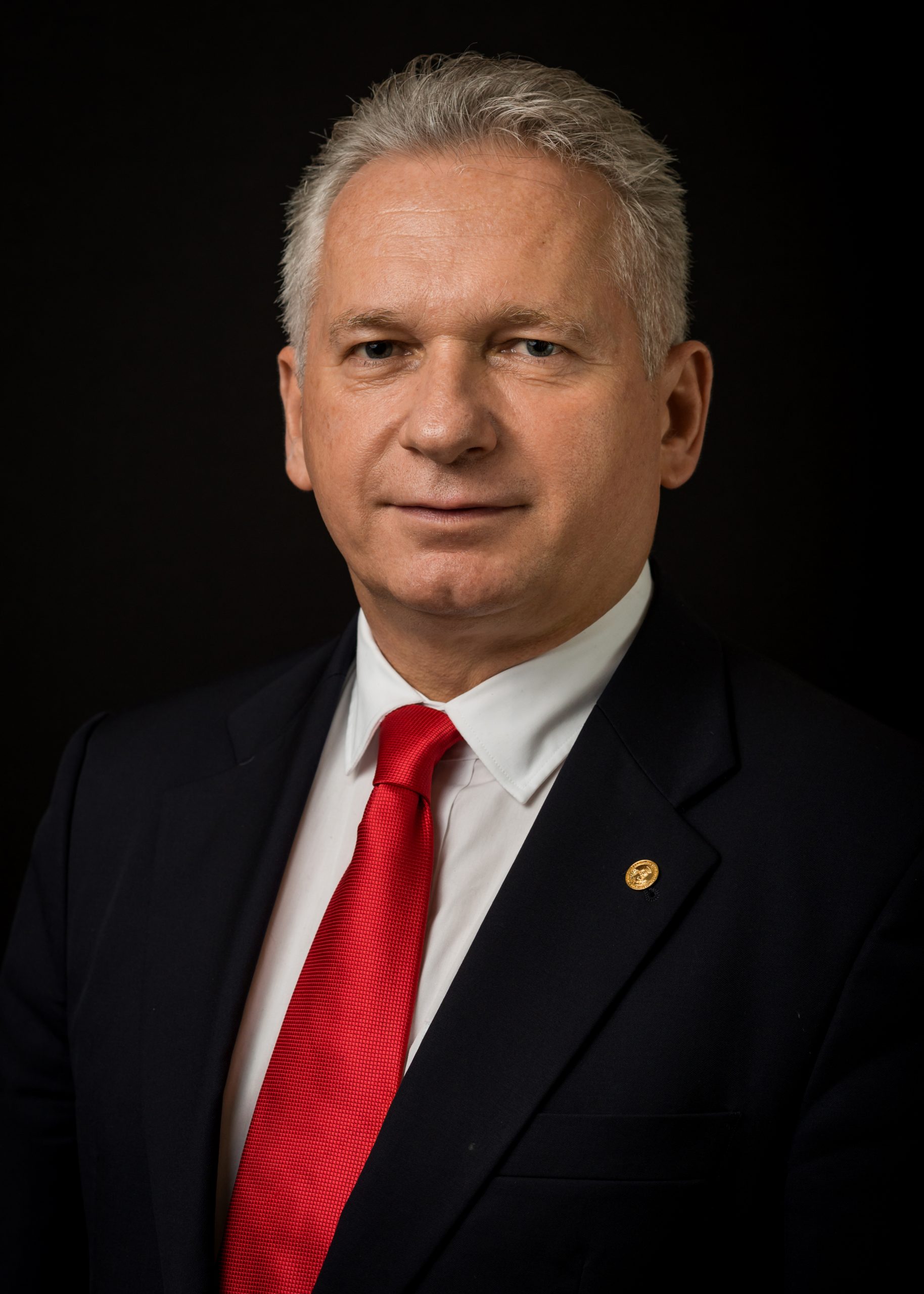

 He is the past President of the Health and Health Care Economics Section of the Hungarian Economics Association.

 Based in Berlin, Zuzanna Gorenstein is Head of Project of the German Rectors’ Conference (HRK) service project “International University Rankings” since 2019. Her work at HRK encompasses the conceptual development and implementation of targeted advisory, networking, and communication measures for German universities’ ranking officers. Before joining the HRK, Zuzanna Gorenstein herself served as ranking officer of Freie Universität Berlin.
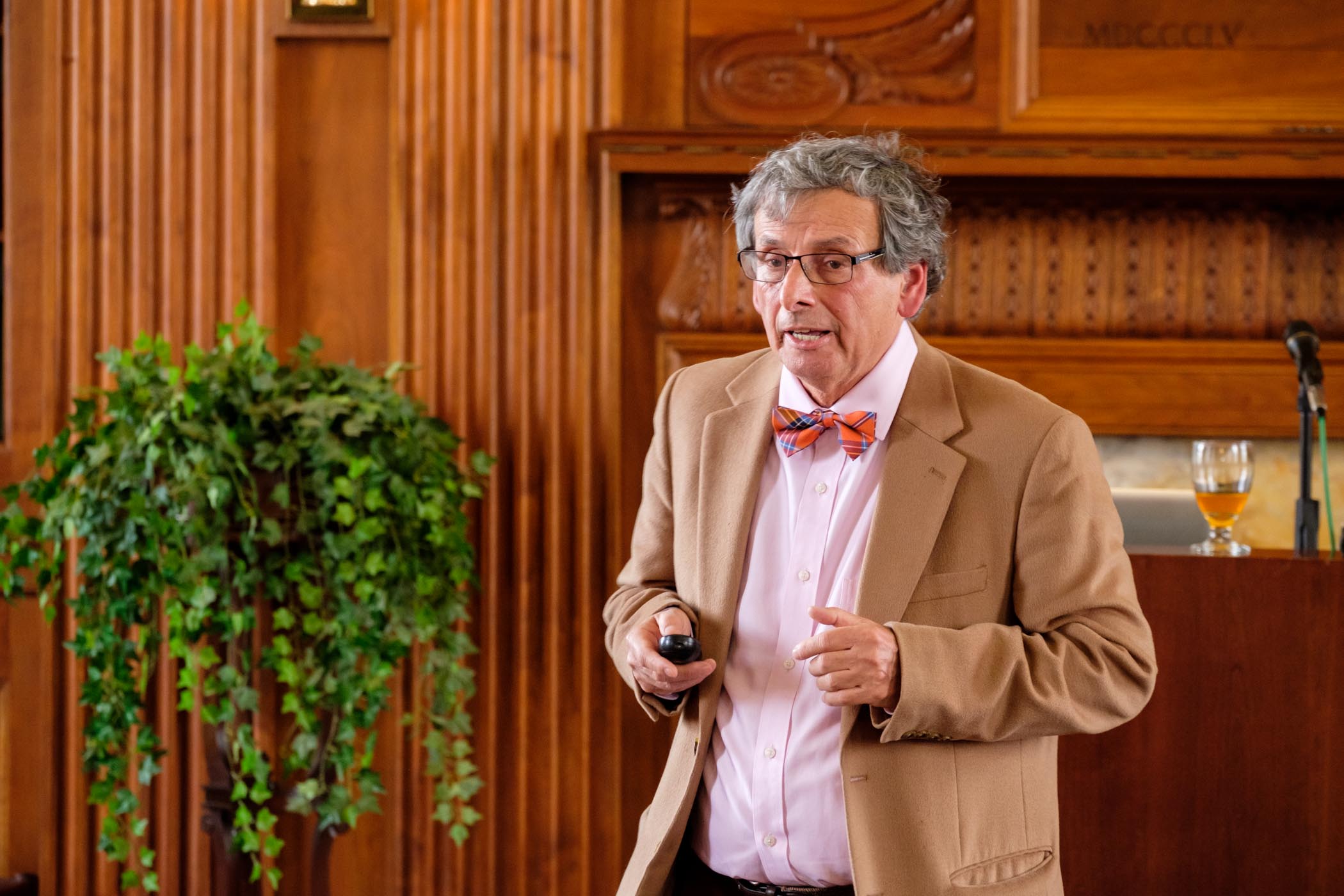 His books on mathematical modeling of chemical, biological, and other complex systems have been published by Princeton University Press, MIT Press, Springer Publishing house. His new book RANKING: The Unwritten Rules of the Social Game We All Play was published recently by the Oxford University Press, and is already under translation for several languages.